

Introduction
Professional barbering is about more than just owning high-quality scissors; it requires mastery of essential cutting techniques. Every haircut depends on precision, control, and understanding how to manipulate hair with the scissor. Among the most important skills are slide cutting, point cutting, texturizing, and blunt cutting.
Mastering these techniques allows barbers to create smooth layers, add texture, enhance style, and achieve consistent results for clients of all hair types. Proper scissor skills not only improve efficiency but also reduce hand fatigue and maintain precision during long working hours.
In this article, we will explore key scissor skills every barber should master, provide detailed step-by-step guidance, and highlight how the right tools, like Trimline scissors, elevate your work.
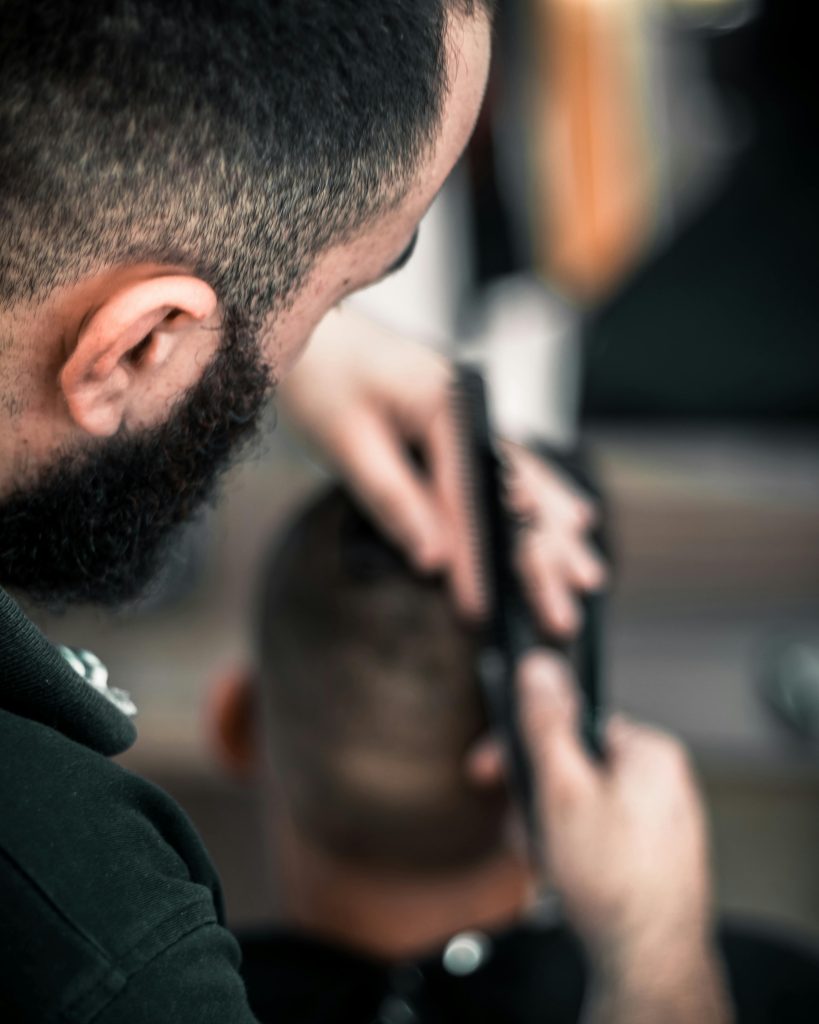
1. Slide Cutting
Slide cutting is a versatile technique that creates soft, blended layers.
- Purpose: Adds movement and texture without harsh lines.
- How to Perform: Hold the scissors at an angle and glide the blades along the hair shaft, removing small amounts gradually.
- Tip: Maintain tension in the section being cut and keep the scissors slightly open to avoid chopping hair.
Benefits: Slide cutting works on fine, straight, and wavy hair to create natural-looking layers. Using razor-edge or convex-edge Trimline scissors enhances smoothness and reduces pulling.
Common Mistakes: Cutting too much at once or using the wrong angle can create uneven layers or blunt edges.
2. Point Cutting
Point cutting adds texture and softens blunt lines, especially at the ends of the hair.
- Purpose: Breaks up lines, creates natural flow, and adds volume.
- How to Perform: Hold the scissors vertically and snip into the ends of hair at small intervals.
- Tip: Use small sections and maintain control to avoid over-thinning.
Benefits: Ideal for layered styles, curly hair, and soft fade transitions.
Common Mistakes: Cutting too aggressively can make hair look thin or uneven. Proper technique and sharp scissors like Trimline convex-edge scissors prevent this issue.
3. Blunt Cutting
Blunt cutting is a classic method for straight, precise cuts.
- Purpose: Creates clean, uniform edges.
- How to Perform: Hold hair taut and cut straight across the desired length.
- Tip: Use high-quality, sharp scissors to avoid bending or splitting hair.
Benefits: Essential for bob cuts, precision lines, and foundation layers.
Common Mistakes: Pulling hair too tightly or using dull scissors can damage hair ends.
4. Texturizing Techniques
Texturizing adds movement and reduces bulk in thick or curly hair.
- Purpose: Softens heavy sections and creates natural flow.
- How to Perform: Use thinning scissors or point cutting in strategic areas to reduce density.
- Tip: Work gradually, focusing on problem areas without over-thinning.
Benefits: Texturizing balances volume and ensures the haircut feels light and manageable.
Common Mistakes: Excessive texturizing can remove too much volume and alter the hairstyle drastically.
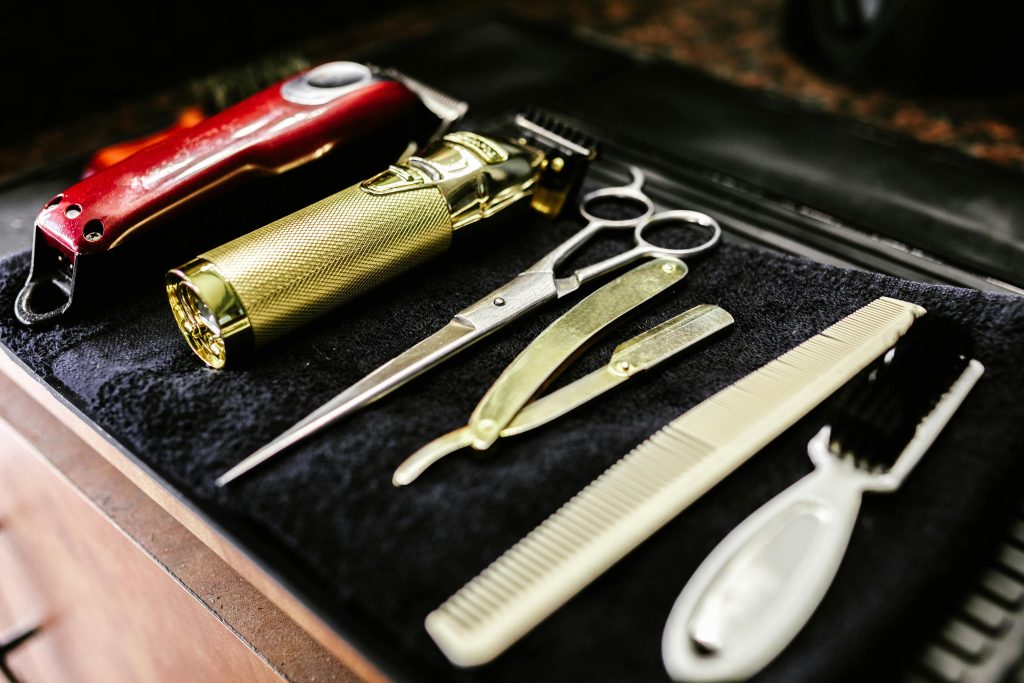
5. Combining Techniques for Professional Results
Mastering scissor skills is not about using one technique exclusively. Professional barbers combine slide cutting, point cutting, blunt cutting, and texturizing to:
- Customize haircuts for different textures and lengths.
- Ensure smooth transitions between layers.
- Enhance client satisfaction with consistent results.
Example: Start with a blunt cut for baseline length, use slide cutting for layers, and finish with point cutting for texture. Trimline scissors’ ergonomic design and sharpness make switching techniques seamless.
6. Tools Matter: Choosing the Right Scissors
Even perfect technique can fail with the wrong scissors.
- Razor-edge scissors: Ideal for smooth slide and point cutting.
- Convex-edge scissors: Perfect for precision, reduced hand fatigue, and professional results.
- Offset or ergonomic handles: Support natural wrist position and prevent strain.
- Maintenance: Regular cleaning, oiling, and sharpening ensures consistent performance.
Tip: Trimline scissors are designed for professional barbers, combining sharpness, balance, and comfort for long sessions.
7. Tips to Improve Scissor Skills
- Practice on mannequin heads to master angles and pressure.
- Work with proper sectioning to maintain consistency.
- Observe experienced barbers to learn subtle techniques.
- Adjust tension and grip to suit hair type and cutting style.
Regular practice and using quality scissors allow barbers to develop muscle memory, speed, and precision.
Frequently Asked Questions (FAQs)
Q1: What’s the difference between slide cutting and point cutting?
- Slide cutting glides along the hair for smooth layers; point cutting adds texture by cutting vertically into ends.
Q2: Which scissors are best for these techniques?
- Razor-edge or convex-edge scissors, like Trimline scissors, provide smooth, effortless cutting.
Q3: How can I avoid hand fatigue while mastering scissor skills?
- Use ergonomic scissors, maintain proper grip, and take short breaks during long sessions.
Q4: Can these techniques be used on all hair types?
- Yes, but adapt angle, tension, and sectioning according to hair texture and thickness.
Conclusion
Mastering scissor skills like slide cutting, point cutting, blunt cutting, and texturizing is essential for every professional barber. These techniques allow precise layering, natural texture, and smooth transitions, transforming ordinary haircuts into professional masterpieces.
Using high-quality scissors such as Trimline razor-edge and convex-edge scissors, combined with proper sectioning, grip, and ergonomic handles, ensures precision, reduces hand fatigue, and enhances client satisfaction. Continuous practice and attention to technique make a barber not only skilled but confident in delivering consistent, flawless results.
With the right knowledge, tools, and dedication, every barber can elevate their craft and create haircuts that impress clients and stand out in professional barbering.
