

Introduction
For professional barbers, mastering scissor handling is just as crucial as choosing the right scissors. Even the sharpest, premium-quality scissors are only as effective as the hands that wield them. Improper handling can lead to uneven cuts, split ends, hand fatigue, and reduced efficiency, which can affect client satisfaction and your professional reputation.
Improving scissor handling ensures precision, speed, and consistent results. Whether you are layering, texturizing, or performing detailed fades, the way you hold and move your scissors impacts every cut. This guide shares the top tips to improve scissor handling, giving you the confidence and skill to achieve flawless haircuts while protecting your hands.
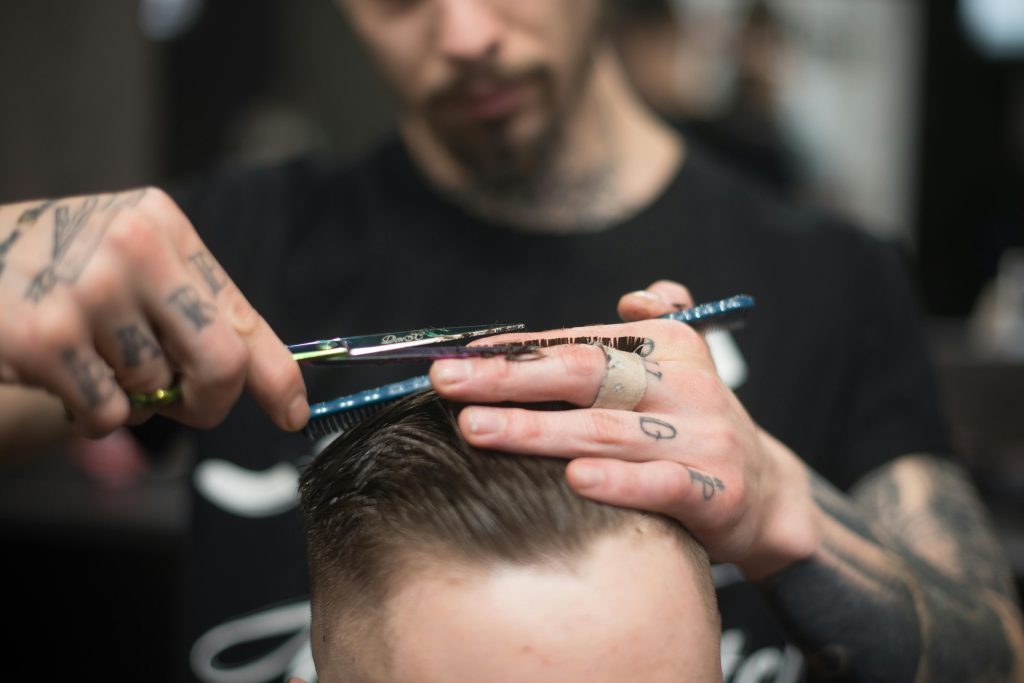
1. Maintain a Proper Grip
The foundation of excellent scissor handling starts with how you hold your scissors.
- Thumb and Ring Finger Placement: Place your thumb in the top handle and your ring finger in the bottom handle. Most professional scissors have an offset handle, which naturally aligns your hand and reduces strain.
- Relaxed Grip: Avoid squeezing the scissors too tightly. Excess tension can cause fatigue and reduces the fluidity of cuts.
- Middle Finger Support: Place your middle finger on the flat handle to stabilize the scissors for precise control.
- Common Mistakes: Holding scissors too tightly or using the wrong finger placement can lead to jerky movements and uneven layers.
Example: When performing slide cutting, a relaxed grip allows the scissors to glide smoothly, creating a soft, seamless finish without tugging the hair.
2. Maintain Correct Hand and Wrist Position
Hand and wrist position plays a major role in precision.
- Keep Your Wrist Neutral: Avoid bending or twisting excessively, which can strain muscles over time.
- Use Arm Movement: Move your whole arm for long, straight cuts rather than relying solely on finger motion.
- Adjust for Different Angles: Angle your hand to match the hair section being cut, ensuring clean and even results.
- Extra Tip: For angled cuts or texturizing, rotate your wrist naturally with the scissors to follow the hairline, reducing hand strain.
Proper positioning improves accuracy, prevents fatigue, and allows for longer working hours without discomfort.
3. Control Scissor Tension
Scissor tension is a small adjustment that makes a huge difference in performance.
- Too Tight: Causes stiffness, reduces fluid motion, and fatigues your hand.
- Too Loose: Leads to hair bending instead of cutting cleanly.
- Check Before Each Cut: Adjust the screw tension daily according to hair type and technique.
Tip: Trimline scissors feature smooth pivot systems, allowing barbers to easily fine-tune tension for effortless, precise cuts.
4. Practice Smooth Cutting Techniques
Technique is just as important as the tool itself. Focus on mastering these:
- Slide Cutting: Glide scissors along the hair for smooth layers without choppiness.
- Point Cutting: Use the tips to create texture and soften edges.
- Layering: Adjust angles and hand placement to build depth and dimension.
- Texturizing: Remove bulk in thick hair while maintaining clean edges.
Example Scenario: When working on a client with thick hair, combining slide cutting and point cutting with proper tension reduces uneven layers and prevents hair from splitting.
5. Use the Right Scissors for the Job
Different techniques and hair types require different scissors:
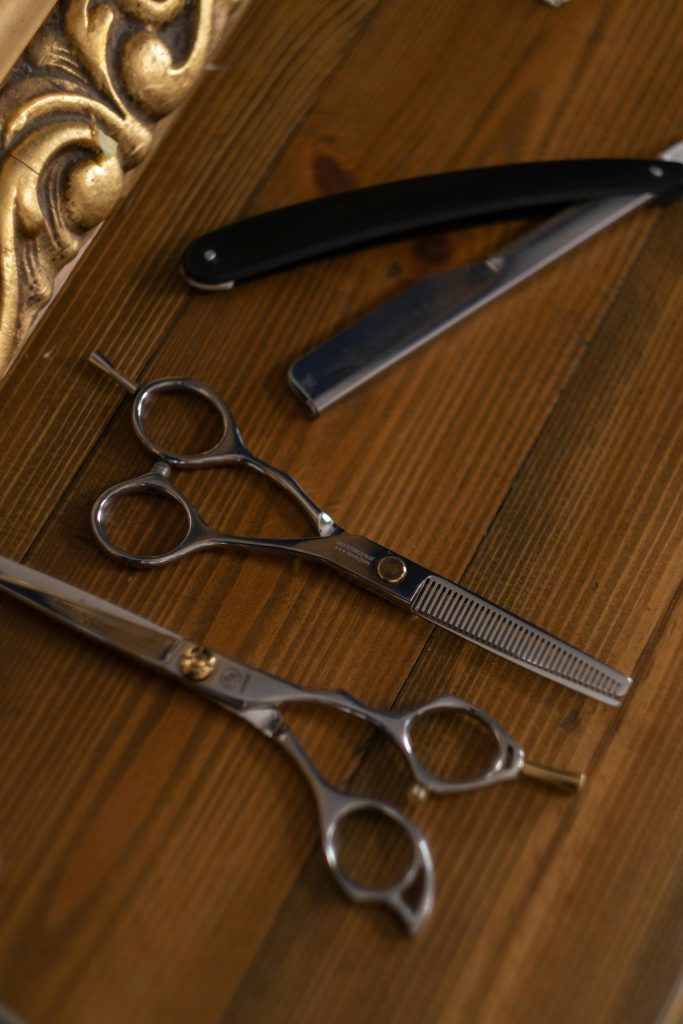
- Razor-Edge Scissors: Best for smooth, precise cuts and detailing.
- Convex-Edge Scissors: Ideal for effortless slide cutting and minimal hair bending.
- Offset or Ergonomic Handles: Reduce strain for long working hours.
- Size Matters: Shorter scissors (5.0–5.5”) are perfect for detailed work; longer scissors (6.0–7.0”) for bulk or finishing cuts.
Using the correct scissors improves handling, reduces hand fatigue, and ensures consistent results every time.
6. Regular Scissor Maintenance
Even perfect handling won’t compensate for dull or poorly maintained scissors.
- Clean Daily: Remove hair and moisture after each haircut.
- Oil Pivot Screws: Reduce friction and ensure smooth operation.
- Professional Sharpening: Razor-edge and convex-edge scissors should be sharpened by certified experts every 3–6 months.
- Proper Storage: Use a scissor pouch or protective case to prevent nicks and rust.
Maintaining your tools improves handling and performance, making every cut smoother and more precise.
7. Strengthen Your Hands and Build Endurance
Barbers often work for hours, so hand strength and endurance matter:
- Hand Exercises: Simple squeezing exercises or grip trainers improve control.
- Stretching: Regular wrist and finger stretches prevent cramps and reduce fatigue.
- Practice: Consistent use and deliberate practice of techniques builds muscle memory for precision cuts.
Example: A barber who practices hand exercises daily can maintain a steady, controlled grip throughout back-to-back appointments without losing accuracy.
8. Observe and Learn from Professionals
Watching experienced barbers can accelerate your skill development:
- Pay attention to grip, angles, tension adjustments, and cutting techniques.
- Note how professionals combine scissor types with handling skills for smooth results.
- Try to replicate their movements and adapt them to your style.
Frequently Asked Questions (FAQs)
Q1: How often should I adjust scissor tension?
- Check before every haircut to ensure smooth, precise cutting.
Q2: Can poor scissor handling damage hair?
- Yes. Improper grip or tension can cause uneven cuts, split ends, or snagging.
Q3: How do I know if I’m holding scissors correctly?
- Your hand should feel relaxed, fingers stabilized, and movement smooth without resistance.
Q4: Do ergonomic scissors really help?
- Absolutely. They reduce hand fatigue, improve control, and allow long-lasting performance.
Q5: What exercises help improve scissor handling?
- Hand grip squeezes, finger stretches, and wrist rotations strengthen the muscles needed for precision cutting.
Conclusion
Mastering scissor handling is essential for every professional barber. From grip and wrist position to tension control, smooth techniques, and proper scissors selection, every factor contributes to precision, efficiency, and comfort.
Pairing high-quality scissors, such as Trimline razor-edge or convex-edge scissors, with skilled handling ensures every haircut is sharp, clean, and effortless. With regular practice, hand exercises, and proper maintenance, your scissor handling will elevate your barbering craft, delight clients, and support long, healthy hands over years of professional work.
